Grinding Culture vs Balanced Lifestyle
Over the past few years, conversations about work have shifted significantly. Hustle culture and long hours are being examined more critically, and for good reason. Burnout, mental health, and the long-term cost of constant pressure are finally being discussed openly, even between young professionals.
This discussion is especially relevant in esports, where the intensity is higher than in most traditional roles. Performance windows are short, competition is brutal, and careers can last just a few years. The consequences of mismanaging effort show up fast.
Alongside this shift, the idea of a balanced lifestyle has gained a lot of traction. Work fewer hours, protect your energy, and achieve similar results. In many situations, this perspective is genuinely helpful. It gives people permission to step away from pointless overwork and the feeling that they should always be doing more.
Having gone through burnout myself more than once, I understand why this resonates.
What doesn’t get discussed enough is what happens when balance becomes the primary goal very early in a career. Comfort and well-being may improve, but learning, skill development, and long-term optionality take a significant hit.
There’s also an assumption that grinding inevitably leads to burnout. In my experience, that’s only true when effort is treated as a constant state rather than a phase. The key is understanding rest as a deliberate and essential part of the process.
Understanding Grinding and Balance as Two Alternating Phases
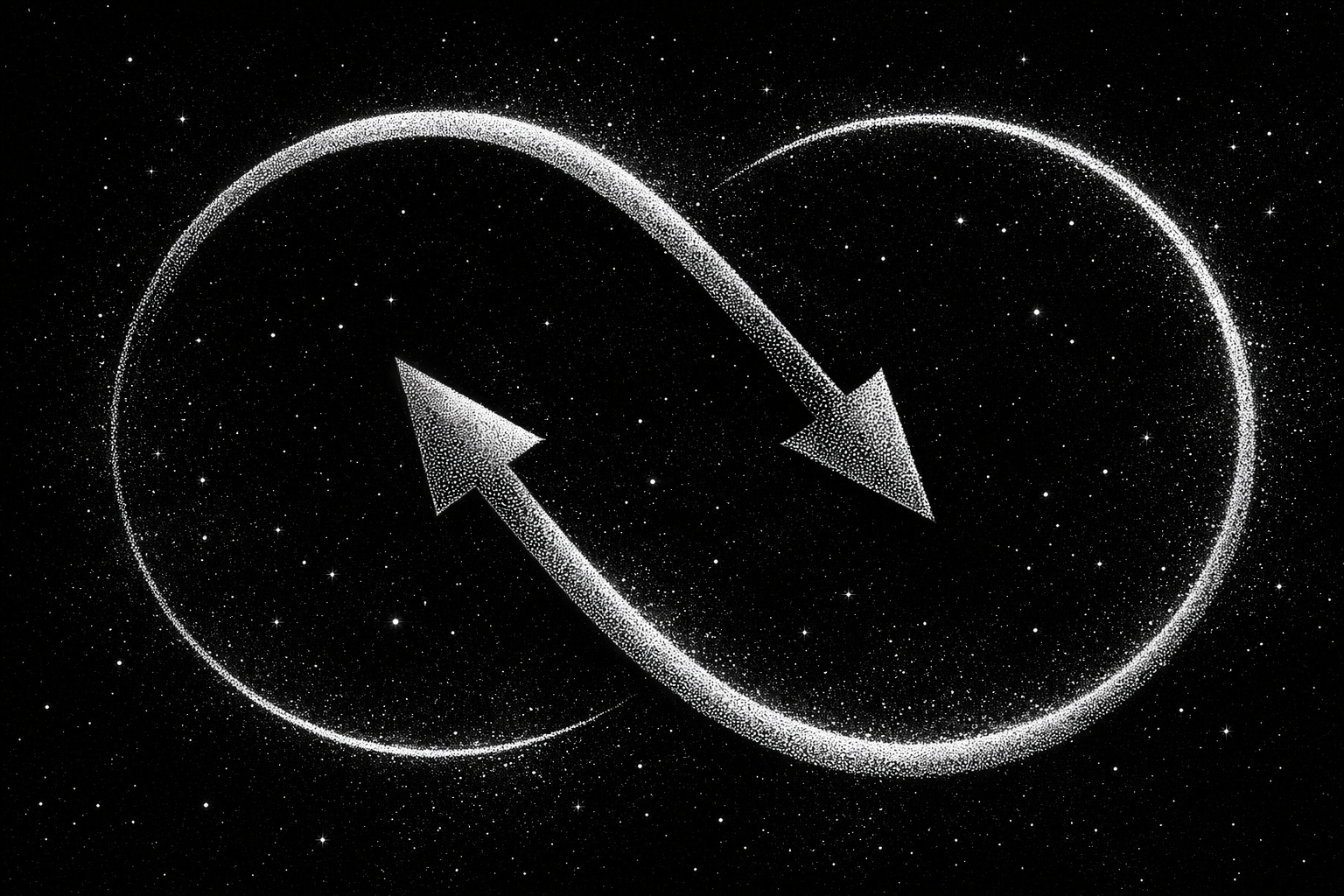
Grinding and balance are often treated as personal preferences, almost like personality traits. In practice, they function more like phases that alternate over time. Most demanding careers move through periods where effort is front-loaded and periods where that effort can be leveraged more calmly.
Grinding early tends to be structurally easier. You have more energy, fewer responsibilities, and a higher learning speed.
Later on, grinding is still possible, but it comes with heavier costs: fatigue accumulates faster, family and financial pressure grow, and adapting to new skills or technologies takes more effort.
The experience gap: why balance is inefficient early
Early in a career, you can work fewer hours, stay organized, and protect your energy, but you will make slow progress. With limited experience, decisions take longer, execution is weaker, and uncertainty eats up a lot of mental bandwidth. Output per hour is simply lower.
At the same time, you’re surrounded by people who already have years of experience, and by peers who may be putting in more reps. Even when competition isn’t explicit, standards are set by those groups.
Balance at this stage supports sustainability and emotional stability. The trade-off is that exposure is reduced. Fewer problems solved means fewer patterns recognized later. Learning stretches out over a longer timeline, which can feel comfortable in the short term but limiting in high-performance environments where progress compounds.
When balance is prioritized very early, the grind often doesn’t disappear. It simply gets postponed to a moment when paying that cost is harder.
Grinding as an investment, not an identity
Grinding works best when it’s treated as an investment rather than an identity. Repeated exposure creates skill depth. Experience sharpens pattern recognition. Over time, execution becomes faster and more precise.
This process compounds. Knowledge builds on knowledge. Each hard problem solved makes the next one easier to understand. Learning accelerates. That’s how people eventually reach a point where a few focused hours produce strong results.
Without that early compounding, later efficiency is impossible. The idea of working less while producing more depends on having accumulated enough experience to compress future effort.
Grinding, in this sense, isn’t a permanent lifestyle. It’s a phase with a purpose. Done intentionally and paired with proper rest, it creates the conditions for balance to actually work later in life.
You Don’t Escape the Grind, You Postpone It
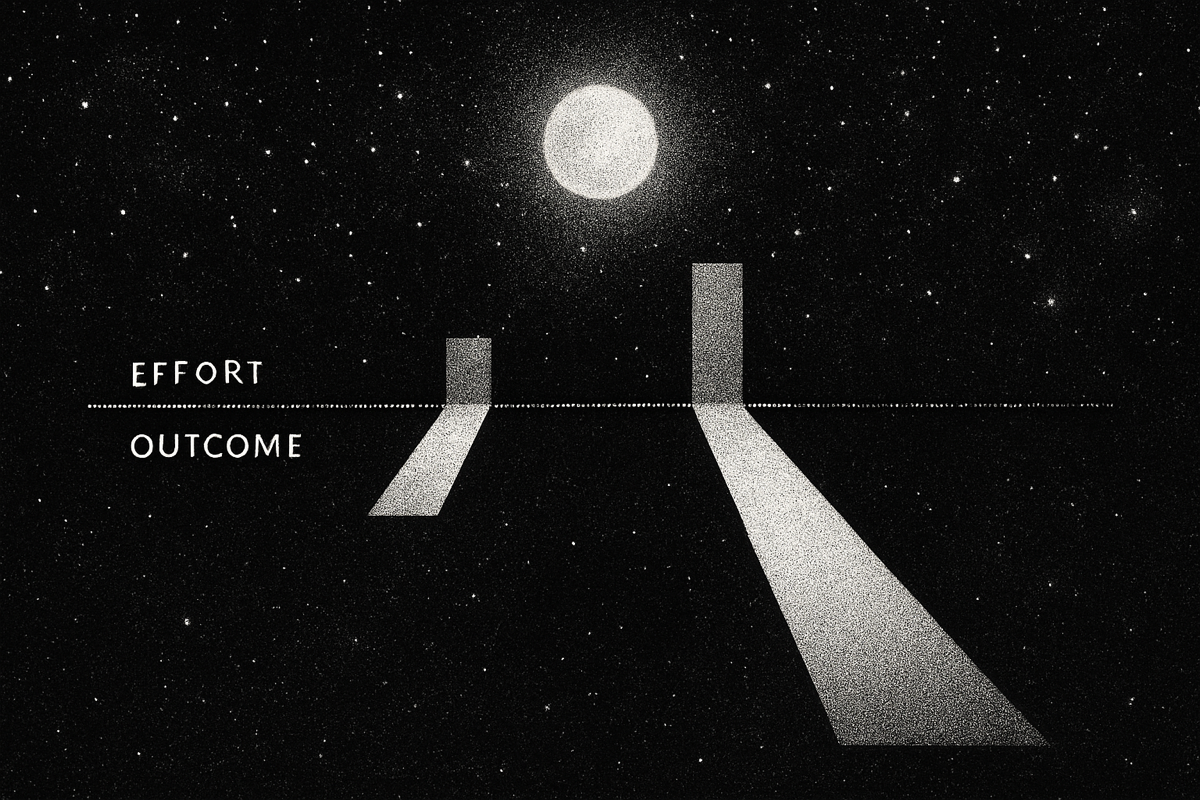
Over the last few years, I’ve seen many young people try to design their careers around comfort early on. On paper, it looks healthy and sustainable. And in the short term, it often is.
What’s less obvious is how effort tends to resurface later, especially when external conditions change. Industries shift. Roles disappear. Expectations rise. When that happens, people with shallow experience often need to ramp up their effort quickly just to stay relevant.
The grind comes back, but this time with more pressure and fewer degrees of freedom.
A career built with limited early intensity depends heavily on things staying the same. That’s increasingly risky in a moment in history where professional careers evolve faster than ever.
When stability breaks, the lack of depth shows up quickly. Learning under urgency is harder. Energy is lower. Responsibilities are heavier. The margin for error shrinks.
Early effort changes the nature of future work. It doesn’t remove difficulty, but it gives you more control over when and how you deal with it. You respond from a position of strength rather than necessity.
This is why the grind is rarely something you can fully avoid. It’s something you schedule, consciously or unconsciously.
Grinding early carries the risk of burnout. Being forced to adapt later in your career often brings high levels of anxiety, sometimes with an even greater negative impact.
Grinding earlier creates a compound effect that gives you optionality later on.
Grinding and Balance in Esports
After working in esports for more than ten years, I’ve heard the job described as “all around the clock” many times. Long days, constant pressure, and little separation between work and life are treated as normal. That description isn’t wrong, but it’s incomplete.
Esports is not a continuous grind. It’s a performance industry built on phases. Intensity concentrates around competition, then releases.
Problems appear when people treat effort as a permanent state instead of something that should rise and fall with performance demands. The same misunderstanding that causes trouble in traditional careers shows up here in a more extreme form.
Players and staff vs management: in-season and non-season roles
In earlier sections, I described grinding and balance as alternating phases rather than fixed lifestyles. Esports makes this distinction very visible. Players and coaching staff live in clear accumulation phases during the season. Learning, execution, and performance are compressed into a short window. Balance, in the traditional sense, is structurally impossible during that time.
Management and support roles operate differently. Their work is closer to a leverage phase: fewer intensity spikes, but a constant baseline of responsibility across the entire year. Problems arise when these two models are mixed. Players are expected to sustain balance in roles designed for accumulation. Management underestimates how costly prolonged in-season grinding actually is.
The solution is to align expectations with phases. In-season professionals need protected off-season time where leverage and recovery are prioritized. Non-season professionals need rhythms that allow sustainable effort without drifting into permanent low-grade grind. Phase-aware leadership reduces burnout and increases long-term performance.
Polarized lifestyles for performance professionals
Earlier, we talked about how balance is inefficient early in a career because experience hasn’t yet compounded. In esports, that inefficiency shows up as polarization. During the season, effort must be intense. During the off-season, effort should change form.
What often happens instead is phase confusion. Players grind relentlessly during competition without managing recovery. Then, in the off-season, rest becomes passive and unstructured. The accumulation phase extends too long, and the leverage phase never fully develops.
High performance in esports requires respecting both phases. In-season grinding should be accepted as an accumulation period, but still bounded and supported by basic recovery. Off-season time should be treated as leverage: intentional rest, reflection, and targeted improvement.
Esports professionals who last aren’t the ones who grind endlessly. They’re the ones who understand when to push, when to step back, and how each phase feeds the next.
How to Survive the Grind Without Burning Out
Grinding can work, but only when it’s supported by the right conditions. Burnout comes from sustained pressure without enough structure, recovery, or meaning.
If you’re going to push for long periods, you need systems that make that intensity sustainable.
1. Leverage obsession
When you genuinely enjoy the process, effort feels different. Long hours still exist, but they don’t register as constant resistance. Curiosity and interest pull you forward rather than requiring force.
This doesn’t mean you love every moment. It means you care enough about the craft to stay engaged even when it’s hard.
Obsession isn’t something you manufacture. It shows up naturally in certain areas. When it does, leaning into it makes grinding far more tolerable.
2. Protect physiology and psychology
Sleep, physical health, and mental stability are non-negotiable. They’re not rewards you earn after working hard. They’re prerequisites for working hard in the first place.
Consistently poor sleep or unmanaged stress inevitably erodes performance. You might still show up, but learning slows, mistakes increase, and recovery takes longer. Over time, intensity turns into exhaustion. Protecting these basics keeps effort from leaking away.
3. Anchor effort to internal motivation
Grinding without a clear internal reason drains fast. External rewards help, but they’re rarely enough on their own. What sustains effort is a strong connection to something meaningful, whether that’s mastery, progress, responsibility, or personal standards.
When effort is tied to something you care about, difficult periods feel purposeful rather than empty. That sense of direction matters more than motivation spikes.
4. Use routines to contain intensity
Routines reduce decision fatigue and create stability. They define when you push and when you stop. Simple, repeatable structures around work, recovery, and personal time prevent intensity from bleeding into everything else.
Routines make work predictable, which is what allows high effort to last.
Effectiveness Before Efficiency
Most of the confusion around grinding and balance comes from trying to optimize too early. Efficiency sounds appealing, especially when energy is limited and expectations are high. The problem is that efficiency only works once you already know what you’re doing. Before that point, the real job is becoming effective.
Effectiveness takes time. It takes repetition. It takes exposure to real problems, and enough experience to understand what actually matters. There’s no shortcut around that process. Once that foundation is in place, effort compresses naturally. Decisions get faster. Balance becomes easier to maintain without sacrificing output.
This is why the question isn’t whether to hustle or protect balance. Both play a role. What matters is recognizing which phase you’re in and aligning your behavior with it. Early phases tend to reward intensity and learning. Later phases benefit from leverage and restraint.
Grinding and balance aren’t opposing choices. They are tools used at different moments. When you understand how they work together, the trade-offs feel less confusing and the path forward becomes clearer.
